
When you hear the word hydroponics, what comes to mind? Maybe you picture a big greenhouse filled with rows and rows of plants, complicated equipment, tubes running everywhere, and someone who knows a whole lot about science. But, hydroponics really doesn’t have to be complicated.
Hydroponics simply means growing plants without soil.
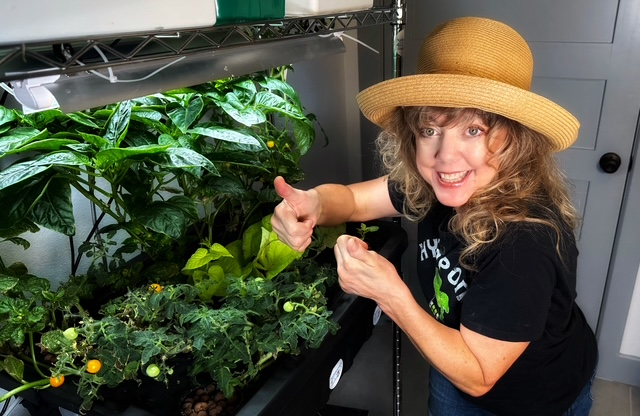
Instead of getting water and nutrients from the soil, hydroponic plants receive them directly around their roots. Give those plants the right amount of light, water, nutrients, oxygen, and room for their roots to grow, and they can thrive without ever being planted in the ground.
But, Don’t Plants Need Soil?
We are so used to putting a seed in the ground that it seems like soil must be one of the things a plant needs to survive. Let’s think about what the soil actually does. Soil helps hold a plant in place, and it provides a place where the roots can find water, nutrients, and oxygen.
With hydroponics, we simply provide those things in a different way. The roots grow in or near water mixed with hydroponic nutrients. We call this the nutrient solution. The plant takes up the water and nutrients it needs directly through its roots. If you’ve ever lifted a hydroponic lettuce plant and seen the long, healthy roots growing underneath it, you know those roots can be pretty happy without soil!
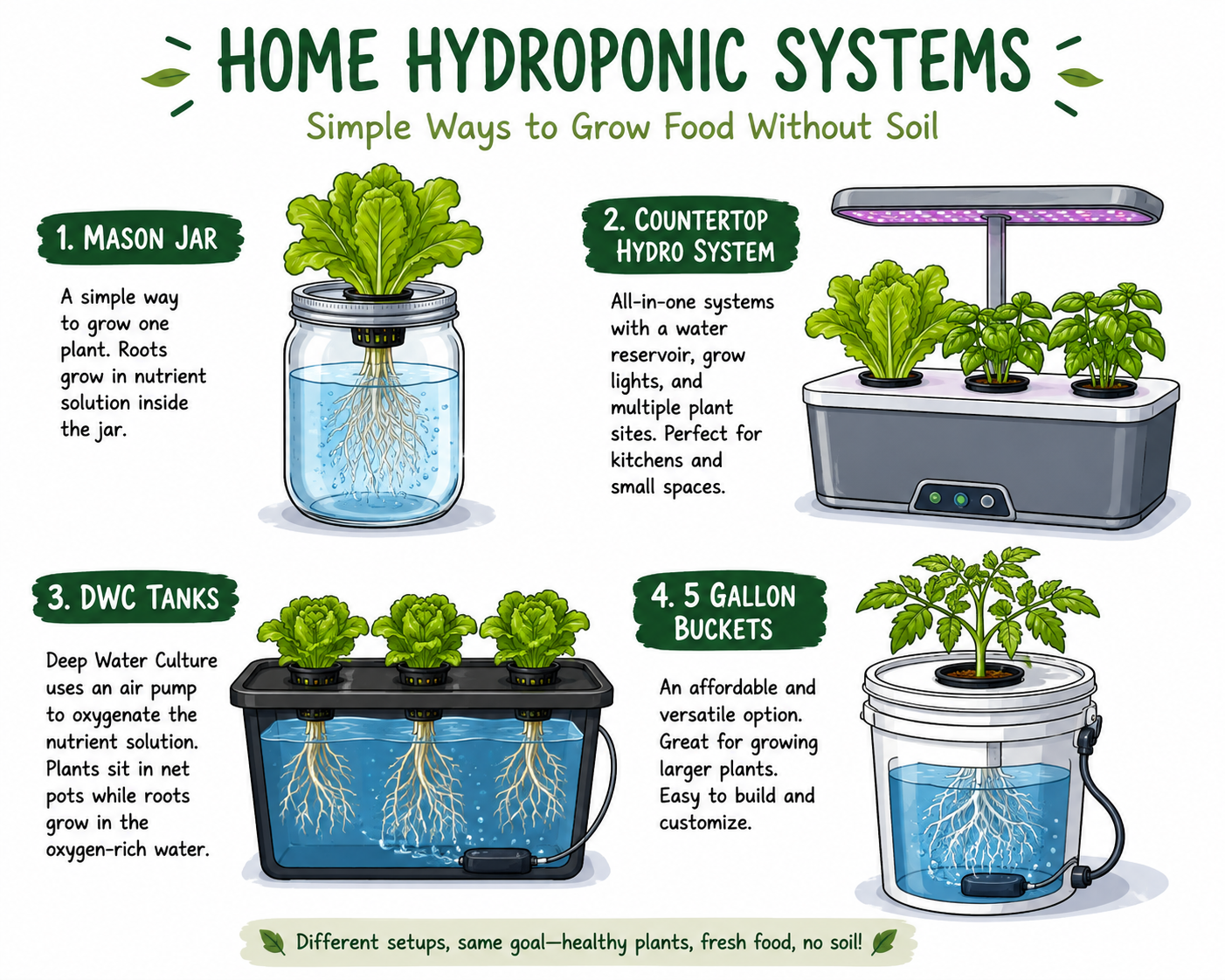
Hydroponics can look very different depending on how and what you’re growing.
It can be a countertop garden sitting in your kitchen. It can be a lettuce plant growing from a quart-size jar. It can be a DIY system made from a 10-gallon tote. Or, it can be a large commercial greenhouse producing thousands of plants.
They’re all hydroponics. The equipment may be different, but the basic idea is the same: the plant is growing without soil, and we are providing what its roots need in another way.
What Does a Hydroponic Plant Need?
Whether your lettuce is growing in a jar, a countertop garden, or a larger DIY system, the basic needs of the plant haven’t changed. It still needs:
- Light to make food through photosynthesis
- Water to keep the plant hydrated
- Nutrients for healthy growth
- Oxygen around the roots
- Space for the roots to grow
We’re not changing what the plant needs. We’re simply changing how we give it those things. That’s one of the things I find so interesting about hydroponics. You can actually see many of the things that are usually hidden beneath the soil. Lift the lid of a hydroponic system and there are the roots. Check the reservoir and there’s the water and nutrients feeding the plant. You get a whole different view of how a plant grows.
Why Grow Food This Way?
There are lots of reasons to grow hydroponically. One of my favorites is the ability to grow food year-round. When I’m growing indoors, I’m not waiting for the right season or worrying about whether it’s too hot, too cold, too dry, or too wet outside.
Hydroponic systems can also be very water efficient because the water stays contained within the growing system rather than soaking into the surrounding ground. Then there’s one of the biggest benefits for me. I can walk into my growing area, harvest a beautiful head of lettuce, and know exactly where it came from and how it was grown.
It’s Still Gardening
Sometimes hydroponics is talked about as though it is completely separate from gardening. I don’t really see it that way. Whether I’m growing a tomato in the garden outside or lettuce hydroponically inside, I’m still growing a plant. I’m watching the leaves, checking the roots, providing water and nutrients, making adjustments, solving problems, and eventually harvesting something I grew myself.
The plant doesn’t care whether I’m calling it traditional gardening or hydroponics. It just wants what it needs to grow. When we understand those needs, we have a whole lot more ways to grow our own food. That’s what makes hydroponics so much fun to explore.